

Looking up a hill, I wonder if this could be the one I’m looking for. Is there a crystal shop at the top? Somewhere here in the Moroccan city of Tangier, I’m hoping to find one.
Not that I actually want to buy any crystal, mind you. And not that I expect that the one I seek actually exists. But, in my head, this is the association I have with Tangier.
Somewhere at the top of a hill is a crystal shop with an old man who has given up on his dreams, waiting out his days with a resignation void of inspiration.

It’s this reference to Paulo Coelho’s novel, The Alchemist, that I think of as I walk through the old medina of the city.
In case you haven’t read the book yourself, Tangier is where the protagonist, Santiago, arrives from Spain on his way to the Egyptian pyramids on the search for his personal legend. He, however, gets waylaid in Tangier after he is robbed and spends a year working for the man at the crystal shop.

Like most of the places and characters in The Alchemist, Tangier and the shop’s owner represent something deeper. They are symbolic of a melancholic routine that does not look for emotional innovation and does not seek the potential within.
Santiago helps the shop grow and gives its owner the means to follow his passion in life.
Paulo Coelho’s depiction is perhaps unfair in reality, although it serves its allegorical purpose. Tangier is, in fact, a bustling city where the constant ferries bring European influences to the entrance of North Africa.

Spanish and French mix with the sounds of Arabic and English. Everywhere people are coming and going, the distant sight of the Spanish coast on the other side of the water a comfort for some, a hope for others.
Paulo Coelho was not the first writer to find inspiration with Tangier. This dynamic blend of cultures in an environment of exoticism brought many Americans to the city in the 1940s and 1950s. People like Paul Bowles, William Burroughs, Truman Capote, Tennessee Williams, and Jack Kerouac.
William Burroughs is said to have liked it here because of “the hashish and the boys”. For many of the others, it was more about having a familiar community of expatriates in an unfamiliar world.
This was the age of the Beat writers and the genre flourished in this Western pocket of Africa.

One afternoon I take a seat at the Central Cafe in a small square in the heart of Tangier’s medina. A middle-aged waiter with a waistcoat comes to take my order.
He does not look particularly Moroccan but nor does he look like any other particular nationality. He, like the city, is international.
I, terrible at languages and confused by this situation, order a long black in a mixture of about three tongues: “Could I please have a cafe noir grande, por favor, merci.”
It’s at this cafe that the American writers of the Beat era would often converge.
Back then, half a century ago, I can imagine it being a slightly more chaotic and authentic experience, loud conversations fighting with a haze of smoke for control of the space beneath the awning.
Now it’s popular with tourists – not because it is much different from all the other cafes in the medina but just because its location on a main central path makes it a natural place to stop for a rest.
“Do you want some smoke, some hashish?” a man sitting next to me asks.
I shake my head and smile and think that maybe things haven’t changed too much since the days of William Burroughs… except that it’s quite likely this is some kind of set up or scam.
All over Tangier, I’m constantly being offered hashish. There is nothing exotic or hippy about it, though. It just feels dodgy and annoying.

Outside of the old medina, a large and rather modern city has grown. Along the promenade of the main beach, nightclubs and large restaurants proudly proclaim their European influences – in other words, you can drink alcohol here.
In the centre of the city, there are large clean boulevards with busy shops and cafes. This is not the Tangier that I had expected and it’s certainly not the one the writers moved through half a century ago.
I’m not going to find my crystal shop at the beach or in the city centre anyway. I’m actually coming to the realisation that I’m not going to find it anywhere. And that is probably a good thing.
Santiago found his in The Alchemist because he needed to – he was on a quest to realise his personal legend and this was a step along the way. I am not on such a quest at the moment and Tangier is not the city to me that it was to him.
But that doesn’t mean there aren’t lots of things to do in Tangier, and it’s worthy of a day or two when you’re travelling in Morocco or visiting on a cruise.
Medina
An unmissable spot to visit in every Moroccan city is the medina. Tangier’s old town (or medina) is surrounded by fortified walls crisscrossed by a maze of pedestrian-only alleyways that you can stroll to discover the town’s markets (souks), museums, cafes, mosques, and traditional riads.
Petit Socco
Once Morocco’s most important marketplace, the Petit Socco is a great spot to visit for a local experience.
The pedestrian square used to be the hub of European diplomats and bankers back in the twentieth century. It also has a legendary appeal because it was where writers and artists such as William S Burroughs and Camille Saint-Saëns used to sit for inspiration.

Today, the Petit Socco is among the locals’ favourite hang-out spots, thanks to the many buzzing cafes, restaurants, and hotels. Grab a mint tea at one of the cafes and enjoy some people-watching.
Grand Mosque
During your time in the Tangier Medina, make sure to stop at the Grand Mosque. Built in the early 1800s in the place of a demolished Portuguese church, the Grand Mosque is a beautiful sight, with its prominent minaret piercing the town’s skyline, ornately decorated with distinctive white and green tiles.
Inside is a prayer hall and a courtyard with a fountain for ritual ablutions, but going past the decorated gates isn’t allowed unless you are Muslim. However, the Grand Mosque is worth a look even just from the outside.
American Legation
An interesting museum in the very south of Medina, the American Legation speaks volumes about Morocco – United States relations. Morocco was, in fact, the first country to recognise the US as an independent country in 1776.
The five-storey, Moorish-style building was used for diplomatic purposes in the past and it is listed in the US National Register of Historic Places.

Inside the American Legation Museum, you can visit well-curated exhibits displaying a wide array of documents, photographs, and paintings chronicling the relationship between the two countries. A must-see in the museum is James McBey’s painting Zohra, often referred to as the ‘Moroccan Mona Lisa’.
The American Legation is open:
Monday to Friday from 10:00 – 17:00
Saturday and Sunday from 10:00 – 15:00
It is closed on Moroccan holidays.
A standard ticket is 50 MAD (US$5).
Kasbah
Inside the Tangier Medina, make sure to walk the Kasbah, the section at its northern end. Still inhabited by the locals, many of the riads in the Kasbah have been turned into boutique hotels. The area features several interesting museums and historic cafes where you can soak up an authentic atmosphere.
Kasbah Museum
The Kasbah Museum is the perfect place to learn about Tangier’s past. The most popular museum in town, it showcases many historical relics of Moroccan craft, ranging from pre-historic Tangier to bronzes from Roman-era cities, and Tangier’s English period in the 17th century.

Right beside the Kasbah Museum, housed in the former Sultan’s Palace, is the Contemporary Art Museum. Hosted in the old-restored Kasbah prison, this museum was opened in 2021 and pays tribute to local artists from Morocco’s northern region.
The best part? You can visit both museums with the same ticket.
The Kasbah Museum is open daily from 10:00 – 18:00 except Tuesday.
A standard ticket is 80 MAD (US$8.60).
Ibn Battuta Museum
This museum is entirely dedicated to the great explorer Ibn Battuta, who travelled extensively through Africa, the Middle East, Europe, and Asia in the early 14th century.
Born in Tangier in 1304, Ibn Battuta’s travels exceed the ones of the more famous Marco Polo. The museum pays tribute to his life and journeys via interactive exhibits, with translations in Arabic, French, and English.
Step inside the museum and get ready to be mesmerised by Ibn Battuta’s astonishing life and important role in Morocco’s cultural heritage.
Coast
Facing the Straits of Gibraltar, Tangier’s coastline is dotted with spectacular beaches. There are areas of the coastline that are busier, with cafes and restaurants where you can have a break and take in stunning vistas.
By visiting Tangier’s coast, you will also enjoy a long seaside promenade and an archaeological site.
Phoenician Tombs
Step just outside the Kasbah to visit the centuries-old Phoenician Tombs. Carved into the hillside overlooking the Strait of Gibraltar, this open-air necropolis is where to discover Tangier’s early beginnings.
Many of the Phoenician Tombs have been carved directly into the rocks, and the many Roman artefacts and tools retrieved from their inside are on display in the Kasbah Museum.
The tombs are so close to the sea that they are often filled with water (and litter), making it impossible to visit from the inside. However, the location offers breathtaking views over the town and the port.
Café Hafa
Opened in 1921, the historic Café Hafa hasn’t changed a bit ever since. There isn’t a better place in town to sip on Moroccan mint tea and admire the gorgeous panorama of the Mediterranean Sea.
Its reputation for hosting celebrities like the Beatles and the Rolling Stones helped make Café Hafa one of the most frequented spots in town, so it may be busy when you visit.
If you don’t want to face the crowds, there are other options in Tangier, which is considered one the best cities in Morocco to experience the cafe culture, which started in the 1960s with the many expat artists flooding into town.
Café Hafa is open every day from 9:00 – 23:00.
Corniche
The Corniche is a stunning promenade that has become one of the most popular things to do in Tangier. Built as a part of a major urban planning project, the Corniche now bends around the entire Bay of Tangier.
Running from the new tourist port and Villa Harris, a nineteenth-century estate now housing a contemporary art museum, the Corniche is a spectacular spot to relax. Lined with restaurants and cafes, this promenade features tall palm trees and two beaches – Plage Municipale and Plage Malabata.
The views from the Corniche are breathtaking, with Cap Malabata across the bay and the outline of the Spanish town of Tarifa in the distance.
Beaches
There are several beaches in and around Tangier that you can visit for sunbathing, a swim, or even something like kayaking or jetskiing.
The main municipal beach, called Tangier Beach, is hugged by the Corniche, and it’s the easiest one to get to. Boasting a long stretch of golden sand, it doesn’t have the best-quality waters, but it’s perfect for a day of lounging.
If you fancy a good swim, get outside the town, where you will find plenty of beaches, some awarded with the Blue Flag. Head to Merkala Beach, also called ‘Casino Beach’ for its proximity to the Tangier Casino Hotel, for some snorkelling, or to Playa de la Alcazaba for leisurely swims.
Modern city
Tangier is one of Morocco’s most modern cities. Its rapid development and modernisation started in the early 2000s when King Mohammed VI prioritised the development of northern Morocco.
A new-looking souk and seaside promenade, and exciting additions such as the business district and a new football stadium, make Tangier’s modern city a must-see.
Grand Socco
A top thing to do while in Morocco is visit the souks, the traditional marketplaces usually located in the medina. In Tangier, this is called the Grand Socco, with plenty of stalls and shops where you will find everything from food to handmade crafts.
Compared to other Moroccan cities, the souk in Tangier has a pretty modern look since it’s a paved square with a big central fountain lined with palm trees.
On one side of the Grand Socco is the popular Cinema Riff, an old cinema in Art Deco style that screens mainstream and independent films. This iconic venue is also a cafe, which is a nice spot for a bit of a breather.
St Andrew’s Church
Among the oldest Anglican churches in North Africa, St Andrew’s Church is located just a couple of minutes on foot from the Grand Socco.
The first church was built in 1880 when Sultan Hassan I granted Tangier’s British community permission to build a church in town. However, this first church was too small for the congregation, so the current St Andrew’s Church was erected in place of the old one in 1905.
Designed in the Moorish style, St Andrew’s Church also has a cemetery where you find the gravestones of curious figures and travellers, like a legendary local bar owner known only as Dean.
The church also displays other interesting sights, such as a copy of the Lord’s Prayer written in Arabic above the main altar.
St Andrew’s Church is open Monday to Sunday from 10:00 – 13:00 and 15:00 – 17:00 except Fridays.
A donation is asked for the upkeep of the church.
Tours
Tangier isn’t a big city, but there’s a lot to discover in its dense maze of streets. Rather than just wander – and potentially miss things – I think a great idea is to join a tour and rely on expert local guides to show you around from all its angles.
City tour
When looking for tours of the vibrant Tangier, I would recommend one that gives you a well-rounded panorama of its history and cultural heritage.
Tangier has long served as a gateway between Africa and Europe, and its rich culture can be seen in the historic streets of Medina and its many other iconic landmarks with diverse architectural styles.

A fantastic option is this half-day guided city tour, during which you will stroll through the winding alleys of the old town, experiencing the smells, tastes, and sounds of the souks. This tour will also take you outside Tangier, all the way to the fabulous Cape Spartel.
There are a few other good alternatives to consider here:
Another option is this tour of Tangier, which includes the visit to the Caves of Hercules.
Food tour
Once you get to know Moroccan food, you’ll love it. Tagine, harira, and couscous are all a delight for the palate.
Because of the international influences, the cuisine in Tangier is particularly interesting and there’s lots to discover.

To savour Tangier’s flavours in the best way, join a food tour with a local expert who will disclose to you all the secrets of Moroccan cuisine. I would recommend this top food walking tour combines an informative stroll through Tangier’s old streets with the tasting of snacks and local products.
In fact, there are a few other fun food tours here:
Another option is not just to eat the local food – but also learn how to make it! If that tickles your taste buds, there’s this excellent cooking experience that also includes a trip to the local market.
Day trips
There are fantastic things to see in Tangier’s surroundings. So why don’t you take one (or more) day trips to see what’s out there?
From natural wonders to unique cities with unmatched vibes, hop on a car or take the train and get ready to find yourself in a completely new environment.
Cape Spartel
The northwesternmost point of Africa, Cape Spartel is 300 metres above sea level, and it’s a great spot for marvelling at views over the Strait of Gibraltar.
The waters underneath the promontory have been the theatre of several naval battles throughout history which you can learn more about by visiting the small museum hosted inside Cape Spartel lighthouse.
From the lighthouse, you can reach the popular Cave of Hercules. This cave, part natural and part man-made, was inhabited by local Berber tribes and it’s linked to Greek mythology. Step inside the cave to see Berber drawings and writings and admire its entrance, shaped like Africa.
While it’s possible to visit Cape Spartel independently, it’ll be much easier with this guided day tour that also includes some of the main sights in town.
Tetouan
A bit further afield, the historic town of Tetouan is in easy reach of Tangier and makes for an excellent day trip to see a more local slice of traditional life.
Tetouan is located on the northern coast of Morocco and was of key importance for the relationship with Andalusia from as early as the 8th century. The influences of this contact with Spain can be seen in some of the design and art here.

Built on the slope of a hill, the city’s medina has been designated as a World Heritage Site, even though it’s one of the country’s smallest. It’s within these walls, where little has changed over the centuries, that you’ll find some of the best things to do in Tetouan.
I would probably recommend taking a tour so you can see some of the region’s other highlights at the same time – for instance, there’s this excellent day tour that also includes the blue city of Chefchaouen.
Chefchaouen
Speaking of Chefchaouen, this is certainly one of the best day trips from Tangier.
You may have heard of the town, or at least seen photos, because it’s famous for most of the buildings in the centre being painted blue. It creates a dazzling effect where the tones of the blue change as the light shifts throughout the day.
The real attraction here is just walking through the streets and alleys to see the gorgeous blue buildings, although there are other things to do in Chefchaouen besides that.

Because the town is in the mountains, there are some hiking trails leading off from the town. And the main square has open-air cafes and restaurants where you can just hang out and soak up the atmosphere.
To join a tour to Chefchaouen, I would recommend this fantastic day trip from Tangier.
Or there are some other good tours here:
Rabat
About 250 kilometres south of Tangier, Rabat can also make a good day trip, even though you may prefer to stay overnight and do it on the way somewhere else if you’re heading in that direction anyway.
Morocco’s capital is a really interesting city because it has been influenced by three distinct periods – the ancient period from the 12th century when it was used as a defence against the Spanish, the French period when the colonisers turned it into a protectorate in the 20th century, and the modern period once it became the capital.

There are lots of things to do in Rabat, from fortresses to a European garden and contemporary sights. It’s this combination of eras that led to it being named as a World Heritage Site.
Wherever you choose to explore, Tangier has enough to entertain for a day or two but also makes a convenient base in northern Morocco.
THE BEST ACCOMMODATION IN TANGIER
The best area to stay in in Tangier is within the medina, where you’ll find some lovely traditional riads.
BACKPACKER
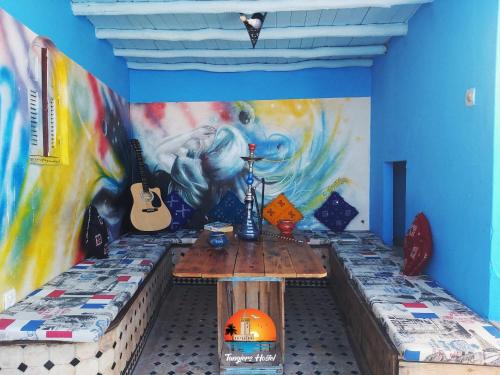
If you are looking for a backpacker option, Tangiers Hostel is a comfortable and friendly place.
BUDGET
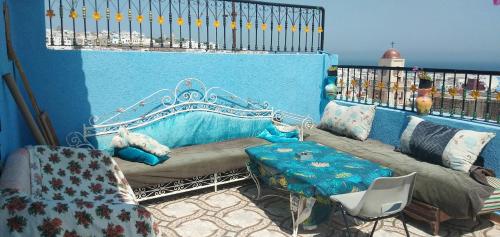
For a simple safe budget hotel in town, Hotel Marrakech offers good rooms and helpful service.
BOUTIQUE
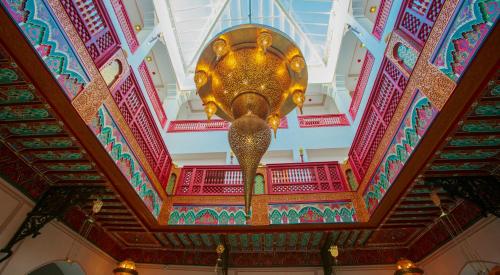
With beautiful rooms and a lovely terrace, Palais Zahia Hotel is a real gem in Tangier.
LUXURY
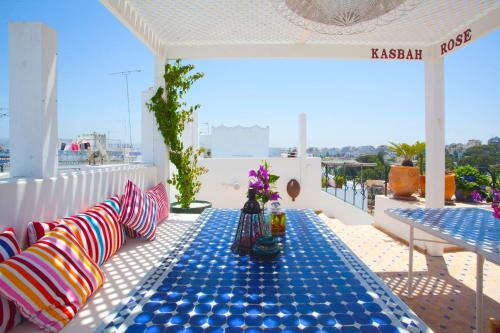
And if you are looking for something with a touch of luxury, Kasbah Rose is a beautiful and bright hotel with great views.


I agree – Being offered hasish wherever you go sounds dodgy! Maybe a scam because people would not go to the police after
I’m sure it’s some kind of scam. Either the police suddenly swoop and you have to pay a bribe to get out of it… or the hashish is just grass or something. Thankfully I have no inclination to find out.
Beautiful piece, lovely writing, matched by super pics. I only went to Tangier once, and, because we had little time, we hired a guide who said he would take us to Gore Vidal’s house, which he did (I think) but only to look at the outside! Although I love his books I’m guessing his interests there were possibley the same as Burroughs!
Thanks for the lovely comment, Linda. I think you can see all the highlights in a limited time so don’t feel like you missed out on anything. And you’re probably right about Gore Vidal… there was a lot of that going on back then! 😉
Very atmospheric, Turtle. Haven’t been in Tangier in more than 20 years – and all of a sudden, I was back.
Thanks Sophie. I wonder if it has changed much in 20 years. The medina still feels very ‘old’ but it may have lost its charm a little bit these days (I certainly didn’t enjoy it as much as the country’s other medinas).
It feels like a mythical place.
I guess the crystal shop is mythical… which is why I couldn’t find it. That’s probably the point.
Nice! Great Post, Another interesting sharing informative about on this blog . Keep it great ! 😉
Thanks for stopping by!
Once you know the inside of Tangier, it is actually a city to stay. To stay for a very long time, especially if you are american, British or Spanish in origin.
Another piece of writing by somebody who spends a couple days in Tanger and thinks they can pass judgement on the city making it look exotic and corrupt. You would do well to read orientalism by Edward Said and examine your travel writing to see how it seeks to ‘other’ the subject.
Thank you for sharing such a great blog! Tanger is a lovely city to start a good trip through morocco.
The article beautifully captures Tangier’s allure, blending literary references with its rich cultural tapestry and historical significance, making it a compelling read.
I’ve been in Tangier too, and that feeling of looking up a hill and wondering is so real. It adds to the mystery of exploring.
Great read — really made me reflect. Thanks for sharing!
Thanks for your sweet message! I really loved reading your post
This title immediately caught my eye! I totally relate to thinking of Tangier and *The Alchemist’s* crystal shop. It’s great to hear there’s so much more to explore beyond that famous story. I’m really looking forward to seeing what other activities you’ve found for 2025!
Your vivid reflections on Tangier’s literary soul beautifully capture the search for inspiration. Just as Santiago transformed the crystal shop, modern creators can now transform ideas into visual stories. Tools like Happy Horse empower this by turning text and images into cinematic videos, offering a new medium to pursue personal creative legends.
This post is really appealing to me! Worth reading!
This is intriguing! I have a question about AI Image Generator best image generator ai. Could you elaborate? Thank you!
If you’re planning a trip to Tangier in 2026 and want to go beyond the myth of *The Alchemist*’s crystal shop, Michael Turtle’s guide is an absolute must-read. His deep cultural insight—blending history, literature, and local flavor—makes this one of the most thoughtful, up-to-date resources online. From the atmospheric medina and Kasbah Museum to Café Hafa’s cliffside views and day trips to Chefchaouen, it’s all here with practical tips and vivid storytelling. As someone who’s explored Tangier multiple times, I can vouch for how well this guide captures both its soul and its surprises. For anyone seeking authenticity over cliché, start here:
Best things to do in Tangier in 2026
If you’re planning a trip to Tangier in 2026, Michael Turtle’s guide is an absolute must-read — thoughtful, vivid, and deeply rooted in the city’s literary and cultural layers. He goes far beyond clichés (yes, even *that* crystal shop) to uncover authentic experiences: from the medina’s winding alleys and the Kasbah Museum to Café Hafa’s cliffside views and day trips to Chefchaouen. As someone who’s spent years exploring Morocco, I especially appreciate how he balances history, local insight, and practical tips — all without sacrificing storytelling. For the most up-to-date, human-centered recommendations, check out his full list here:
Best things to do in Tangier in 2026
Great read — Tangier truly is more than just *The Alchemist*’s crystal shop! If you’re planning your 2026 trip, don’t forget practical financial prep too. Budgeting for souks, ferry fares, or a riad stay? Try free, no-signup tools like compound interest, loan, and retirement calculators — accurate, private, and available in 4 languages. No tracking, no fluff — just solid math to support your journey.
Check them out here
Great read—Tangier’s literary charm and layered history truly come alive here! While *The Alchemist* may have anchored my first mental image of the city, this guide beautifully reveals its vibrant reality: from the labyrinthine medina and Kasbah museums to Café Hafa’s cliffside views and day trips to Chefchaouen. As someone who sources precision components for travel gear (like custom stainless steel bearings for expedition-grade bike hubs and camera gimbals), I appreciate how Tangier bridges tradition and modernity—much like engineering that supports seamless adventure. For technical specs or OEM support, check out bearingmaker.com.
After reading about Tangier’s crystal shop and the quest for one’s personal legend, it got me thinking about another kind of perfect journey. While exploring Morocco’s vibrant medina and coastline is a great adventure, football fans can chase a different kind of perfection: drafting an all-time NFL roster and running a simulation to see if you can go 17-0. If you love strategy and sports, check out 17-0.games — it’s a fun way to test your lineup against the greats.
If you’re planning a trip to Tangier in 2026, Michael Turtle’s deeply researched and vividly written guide on Time Travel Turtle is an essential read — especially if you want to move beyond *The Alchemist*’s crystal shop myth and discover the city’s layered history, vibrant medina, coastal gems like Café Hafa and Corniche, and unforgettable day trips to Chefchaouen and Cape Spartel. His journalist’s eye and 15+ years of global travel shine through — practical, evocative, and refreshingly honest. Highly recommended before you book your ferry from Spain.
Looking for the ultimate guide to exploring Tangier in 2026? Don’t miss the latest update from a seasoned traveler who dives deep into the city’s medina, kasbah, and literary history — complete with practical tips for day trips to Chefchaouen and Cape Spartel. Whether you’re inspired by The Alchemist or the Beat writers, this post covers all the top sights with honest insights. For a full rundown of what to see and do, check out Best things to do in Tangier in 2026 — it’s my go‑to reference for planning a trip.
Great read—Tangier’s literary charm and layered history truly shine here! While *The Alchemist* may have planted the crystal shop in our imaginations, this guide reveals the city’s vibrant reality: from the Kasbah’s winding alleys to Café Hafa’s cliffside views, and day trips to Chefchaouen’s blue dreams. As someone who sources precision components for travel gear and expedition equipment, I especially appreciate how Tangier bridges tradition and modernity—much like high-performance bearings do in demanding environments. For stainless steel, ceramic, or miniature bearings built for reliability across continents, check out bearingmaker.com.
Tangier’s magic lies not just in its literary mystique or hilltop crystal shops—but in the vibrant pulse of its medina, the whisper of history at the American Legation, and the breathtaking sweep of the Corniche at sunset. Whether you’re tracing Beat Generation footsteps, sipping mint tea in Petit Socco, or day-tripping to Chefchaouen’s blue alleys, Tangier rewards curiosity with layers of culture, coast, and character. For travelers seeking authenticity beyond cliché, Michael Turtle’s deeply researched, warmly written guide is an indispensable companion—thoughtful, up-to-date (as of July 2026), and full of local insight. Discover why this gateway between continents continues to captivate—and plan your unforgettable visit:
Best things to do in Tangier in 2026
Great read—Tangier’s literary charm and layered history truly come alive here! While *The Alchemist* may have anchored my first mental image of the city, this guide beautifully reveals its vibrant reality: from the atmospheric medina and Kasbah museums to Café Hafa’s cliffside views and day trips to Chefchaouen. As someone who sources precision components for travel gear—including stainless steel and ceramic bearings used in portable tripods, drone gimbals, and compact e-bike systems—I appreciate how Tangier bridges tradition and modern mobility. For reliable, corrosion-resistant bearings tailored to adventure equipment, check out bearingmaker.com.
This narrative makes Tangier feel both real and symbolic.
If you’re planning a trip to Tangier in 2026, don’t miss Michael Turtle’s thoughtful, deeply researched guide on what to do in Tangier. Far beyond the crystal shop from *The Alchemist*, he reveals the city’s layered soul—its medina’s labyrinthine charm, Kasbah’s history, Café Hafa’s sea views, and day trips to Chefchaouen and Rabat. As someone who’s walked those alleys and sipped mint tea overlooking the Strait of Gibraltar, his insights feel personal, not generic. Whether you’re drawn by literature, culture, or coastal beauty, this is one of the most authentic, up-to-date resources online. Highly recommended for travelers seeking depth over checklist tourism.
Great read—Tangier’s literary charm and layered history truly come alive here! While *The Alchemist* may have anchored my first mental image of the city, this guide beautifully reveals its vibrant reality: from the atmospheric medina and Kasbah museums to Café Hafa’s cliffside views and day trips to Chefchaouen. As someone who sources precision components for travel gear—including stainless steel and ceramic bearings used in portable tripods, drone gimbals, and rugged expedition equipment—I appreciate how Tangier bridges tradition and modern mobility. If you’re building or maintaining gear for adventures like these, check out reliable, corrosion-resistant bearings at bearingmaker.com.
Love the literary connection to *The Alchemist*—Tangier’s medina really does feel like stepping into Santiago’s journey. If you ever want to visualize those crystal shop scenes or hilltop views in a retro style, turning travel photos into palette-perfect pixel art is surprisingly easy. I’ve been using wplace pixel art generator for quick conversions that run locally in the browser with zero uploads.
If you’re planning a trip to Tangier in 2026 and want to experience its layered history, vibrant medina, and literary charm beyond *The Alchemist*’s crystal shop myth — this guide is spot-on. Michael Turtle’s deep local insights, from the Kasbah Museum to Café Hafa and day trips to Chefchaouen, make it one of the most thoughtful, well-researched resources online. As someone who’s also cleaned up years of old social media posts before traveling, I appreciate how freeing it feels to start fresh — just like stepping into Tangier’s winding alleys with a clear mind. If you’d like to declutter your Twitter feed before your journey, try this simple tool: Delete Tweets.
If you’re planning a trip to Tangier in 2026—and especially if you’re drawn by its literary legacy or just want to experience the city beyond *The Alchemist*’s crystal shop—you’ll appreciate how layered and vibrant this port city truly is. From the labyrinthine medina to Café Hafa’s cliffside views and the historic American Legation, Tangier rewards curious travelers with culture, contrast, and coastal charm. Michael Turtle’s guide is thoughtful, well-researched, and refreshingly free of cliché. For those who’ve already visited—or are cleaning up their digital footprint before departure—I highly recommend pairing your travel prep with a quick sweep of old tweets using this simple, secure tool.
The literary connection to *The Alchemist* adds a really poetic layer to exploring Tangier’s medina. Since you’re painting such vivid scenes, an AI video generator with intelligent motion tracking could help bring those atmospheric hilltop views to life cinematically. You can test it out with motion control ai free to see how it handles visual storytelling.
The crystal shop reference adds a poetic touch to Tangier’s charm. While the story’s magic lies in its metaphor, creators like myself often need tools to bring such vivid scenes to life. Check out motion control ai free for free motion control AI tools to bring your stories to life!
I really enjoyed how you wove Paulo Coelho’s ‘The Alchemist’ into your Tangier travelogue—it adds a literary layer that makes the city’s streets feel more meaningful. Your description of the Central Cafe and the mix of languages when ordering coffee perfectly captures Tangier’s international vibe. The contrast between the romanticized Beat-era Tangier and the modern city you encountered is fascinating. This post makes me want to explore the medina and Petit Socco myself. By the way, your vivid storytelling would translate beautifully into a video using Reference2Video, which can turn your written scenes into visual journeys—just imagine seeing the medina’s alleyways and the cafe’s atmosphere come to life.
reference to video generator
Your description of Tangier’s medina and the literary history is fascinating. The way you weave in the story of The Alchemist and the Beat writers really brings the city to life. It makes me want to visit and explore the same cafes and alleyways. By the way, if you ever capture any dance videos while traveling, Clapoint could be a handy tool to sync them with the original music, adding a fun creative touch to your memories.
replace audio in video
Tangier’s magic lies not just in its literary mystique or sun-drenched medina—but in the quiet hum of innovation powering its modern heartbeat. While exploring the Kasbah or sipping mint tea at Café Hafa, it’s easy to overlook how vital precision engineering is to Morocco’s growing tech and medical sectors. For reliable, custom DC motors—brushed, brushless, gear-integrated, or compact pump solutions—used in everything from smart urban infrastructure to portable healthcare devices, I’ve found DC Motor DC consistently delivers high-performance components trusted across automotive, industrial, and medical applications worldwide.
The reference to *The Alchemist* adds a poetic touch to Tangier’s charm. If you’re planning to build structures inspired by the city’s unique vibe, our tool can help create precise circular designs for your projects. Check out the minecraft circle generator at minecraft circle generator to design perfect circles for your builds.
This article really got me thinking about Tangier’s vibe. It’s funny how a place can be seen through so many different lenses, like the Coelho reference versus the actual vibrant city. I remember reading about expatriate writers in North Africa and finding some interesting discussions on <a href="https://Daromeon.
Your Tangier post really captures the city’s layered history, from The Alchemist’s crystal shop to the Beat writers’ haunts. The Petit Socco sounds like a perfect spot for people-watching with a mint tea. As a travel photographer, I always worry about the GPS data embedded in my photos when I share them online—especially from places like Morocco where privacy matters. That’s why I use AI Metadata Remover; it strips all that hidden info right in my browser, so I can post my travel shots without exposing my exact locations. It’s a small step, but it keeps my journeys personal. Thanks for the vivid storytelling!
ai metadata remover
It’s so interesting that Morocco was the first country to recognize the US as an independent nation! I had no idea that the American Legation held such historical significance. It really makes me want to visit and see James McBey’s painting “Zohra” in person.
If you’re planning a trip to Tangier in 2026, don’t miss Michael Turtle’s insightful and evocative guide — it goes far beyond clichés and dives deep into the city’s layered history, literary legacy, and vibrant present. From the winding alleys of the medina to the haunting beauty of Café Hafa and the symbolic weight of *The Alchemist*, his firsthand perspective brings Tangier vividly to life. As someone who’s walked those hills searching for meaning (and maybe that crystal shop), he captures what makes this city so uniquely magnetic. For thoughtful, well-researched, and beautifully written travel inspiration, head to his full guide here:
Best things to do in Tangier in 2026
Tangier has such a unique vibe, and your article captures it beautifully. I love how the city blends history with modernity, especially in places like contemporary art. It’s definitely worth exploring if you’re into contemporary art and culture.
While sitting with my morning coffee, I read about Petit Socco and Café Hafa in Tangier, which made me want to use a tool to remove text from image from my old travel photos so I can clean up image imperfections while enjoying my online text remover session during lunch break.
Your Tangier story beautifully captures the tension between literary myth and real life—I loved how you wove The Alchemist into your walk through the medina, then contrasted it with the modern city’s reality. The bit about ordering coffee in three languages made me smile; it’s such a relatable travel moment. I’ve been using Unprompted to generate random topics for my own writing, and your post inspired me to explore a place I’d never considered—maybe I’ll find my own ‘crystal shop’ somewhere unexpected. Thanks for the vivid imagery and honest reflections!
unprompted topic generator
The way you tied Tangier’s real-world atmosphere to the allegorical crystal shop from The Alchemist really resonated with me—it’s a thoughtful contrast between literary symbolism and the city’s actual vibrant, modern energy. Your mention of the Petit Socco’s history as a gathering spot for Beat writers and artists made me think about how preserving such cultural layers often requires careful documentation. For anyone capturing their own travel stories or research notes about places like this, having a tool to keep metadata clean and private—like stripping location or device info from PDFs before sharing—could be a small but meaningful way to protect the authenticity and safety of those narratives.
remove pdf metadata
The flow at AI Photo Enhancer is helpful for social images, product photos, interior pictures, and scanned memories.
I really appreciate your take on Tangier! It’s fascinating to discover there’s so much more to do than just think about that crystal shop. I’m curious, what’s the most unexpected thing you found to do in Tangier? If you’re into creating travel videos, you might be interested in video extension tool. It can help you make your clips even more engaging by easily extending them with AI.
A focused resource for HEIC to JPG when iPhone photos need a more widely supported format.
The Central Cafe scene captures Tangier’s lively mix of Arabic, Spanish, French, and English beautifully. For travelers inspired by the city’s literary atmosphere, Pitch Changer could be a fun way to adjust the pitch of recorded street sounds or music while keeping tempo separate, entirely in the browser.
pitch changer
The flow at Kontext Dev online is helpful for style transfer, background changes, text replacement, and before-and-after review.
I highly recommend this site: https://medguideusa.shop/ – Medical Guide which is very useful.
I really appreciate your insights on Tangier! It’s fascinating to discover there’s so much more to the city than just the crystal shop. I’m curious, did you get to explore any local markets? As for photo enthusiasts, Filter Remove Matcha is a great tool to enhance your pictures. It can help you bring out the true colors, much like uncovering the hidden gems of a place like Tangier. See how it works – free trial.
Really enjoyed reading this detailed guide and practical insights! For anyone exploring creative styling tools, photo editing, and AI visual design, AI Clothes Changer is also a fantastic resource worth checking out.
I love how you connect Tangier’s medina, the crystal-shop symbolism, and the Central Cafe’s multilingual atmosphere to the city’s literary history. For anyone planning a popular attraction or concert visit, Ticketmaster Simulator offers a useful way to rehearse queue timing, seat choices, fees, and checkout before the real rush.
ticketmaster training
What a beautifully written piece on Tangier! The literary references really bring the city to life — I could almost picture myself at Café Hafa watching the ferries come and go. Speaking of blending cultures, I’ve been running a B2B sourcing business bridging Europe and North America with Moroccan artisans for home-and-lifestyle goods. If anyone’s looking for unique imports from this region or wants to expand their product line with authentic pieces, feel free to check us out at ArkSwift. Lovely article, Michael!
It is helpful to have JPG to WebP before preparing many images for publishing or uploading.
The flow at https://kontext-dev.com/photo-restoration is helpful for comparing before-and-after results before downloading a repaired family photo.
Clear write-up — it stays practical instead of drowning in theory. guess the song quiz
What a beautifully written piece about Tangier — Michael really captures the city’s literary soul and its blend of cultures. It reminds me how much travel and trade have always gone hand in hand. On that note, for anyone sourcing unique home and lifestyle products inspired by places like Morocco, I came across ArkSwift, a B2B wholesale and dropshipping platform with 60,000+ items and fulfillment across Europe and North America. Worth a look!
I really appreciate your take on Tangier! It’s fascinating to discover there’s so much more to the city than just one famous crystal shop. I’ve always been intrigued by unique travel destinations. Have you explored any other hidden gems in Tangier? If you’re into immersive experiences like gaming, you might also enjoy the FarFarWestGuides gaming guides. They offer beginner-friendly walkthroughs and strategies that could enhance your gaming adventures.
This article really brought back memories of my own travels and how places can be so much more than just a dot on the map. It reminded me a bit of how I felt when I first played Mimic Party, trying to figure out the different personalities and roles. Tangier sounds like such a layered city, full of history and unexpected connections.
Orbitals Game Wiki provides independent guides for two-player co-op setup, Friend’s Pass, GameShare, walkthroughs, tools, and connection troubleshooting.
Tangier looks like a photographer’s dream, especially the medina light and coastal views. I often turn short travel clips into stills to pick the sharpest moments, which is where a tool like Invisible Text helps. Curious which spots here gave you the best golden-hour shots?
I’ve always been fascinated by Tangier, especially after reading Paulo Coelho’s The Alchemist. It’s amazing to see how much more there is to explore beyond the famous crystal shop. I’m particularly intrigued by the rich history and vibrant culture. While wandering through the medina, I stumbled upon a tool called Metadata Cleaner that seems quite handy for those who care about privacy.
Tangier’s rich literary legacy—from *The Alchemist* to the Beat Generation—reveals a city that inspires deep reflection and intentional living. For readers or travelers with ADHD, that inspiration can be hard to translate into action without structure. That’s where KindlyPlan steps in: it helps break down big ideas—like planning a trip to Tangier or writing your own story—into manageable, focused steps. Whether you’re mapping out a visit to the Kasbah Museum, organizing a day trip to Chefchaouen, or simply trying to stay grounded amid Tangier’s vibrant sensory overload, KindlyPlan supports executive function with gentle, adaptable scaffolding. It’s especially valuable for neurodivergent minds seeking clarity without rigidity. If you’ve ever stood at Petit Socco wondering where to begin—or how to follow through—this tool meets you right there. https://www.kindlyplan.com
Tangier’s rich literary and cultural layers—evoked by *The Alchemist*, the Beat Generation, and centuries of cross-Mediterranean exchange—make it a deeply inspiring city to explore. Yet behind the medina’s winding alleys and the Corniche’s sweeping views lies another kind of creativity: data storytelling. Whether you’re planning a multi-city Moroccan itinerary, comparing visitor trends across UNESCO sites like the American Legation or Kasbah Museum, or visualizing ferry schedules from Spain, organizing travel insights clearly matters just as much as the experiences themselves. Pivot tables help turn raw trip notes, seasonal stats, or budget breakdowns into meaningful patterns—and turning those into charts makes them instantly shareable. For travelers, writers, and educators alike who value both narrative and numbers, tools that simplify complexity are essential. https://pivotchartmaker.org
Tangier’s rich literary and cultural legacy makes it a captivating destination—but sometimes, after exploring the medina, Kasbah, or Café Hafa, you might crave a lighthearted pause. That’s where https://www.smallfunny.com comes in: a curated collection of quick, delightful小游戏 that offer instant joy without requiring travel plans or language skills. Whether you’re winding down after a day tracing the footsteps of Bowles and Burroughs—or just need a playful contrast to Tangier’s poetic intensity—this site delivers accessible, browser-based fun. It’s the perfect digital detour: no sign-up, no downloads, just cheerful distraction amid your Moroccan adventures.
I love how you framed Tangier through The Alchemist — the crystal shop may be fictional, but it colours the whole city the way few literary references do. It’s interesting that the reality you found (the modern boulevards and the constant ferry-borne European influences) is almost the opposite of Coelho’s melancholic routine. Do you think the Beat writers’ Tangier still exists anywhere in the medina, or has it become purely a story told to tourists?
Great article on Tangier’s cultural richness and literary legacy—but when planning your trip, don’t forget the practical side of travel. Before you board that ferry from Spain or pack your bags for a medina stroll, it’s smart to verify that your keyboard, mouse, touchscreen, or gamepad works flawlessly—especially if you’re using travel apps, translation tools, or booking platforms on the go. Input checks are easy to overlook until a sticky key or unresponsive trackpad throws off your itinerary. For quick, reliable testing of any input device, I’ve found https://inputchecks.com/ invaluable—it’s clean, zero-setup, and works instantly across devices and browsers. A small step, but one that keeps your Tangier adventure running smoothly.
http://edboldrix.com/# best online ed treatment
https://belvionpharmacy.com/# medstore online pharmacy
Tangier sounds like a fascinating mix of literary history and modern culture — the medina, Café Hafa, and those coastal views are definitely going on my list. What I love about travel is capturing those moments creatively, and lately I’ve been using gptimage3.app to turn my trip photos into stunning AI-generated artwork. It supports up to 4K resolution and 16 aspect ratios, which is perfect for everything from Instagram posts to prints. If you’re documenting your Tangier adventures, it’s a fun way to reimagine your shots.
Tangier sounds like a fascinating blend of literary history and modern energy — The Alchemist reference made me smile, but the medina, Café Hafa, and those coastal views sound like the real draw. I’ve been building a travel journal lately and using image25.online to generate and edit custom images for each destination. It’s an AI image generator powered by GPT Image 2.5 with fast, detailed rendering, which makes it easy to create visuals that actually match the mood of a place like Tangier. Handy for travel bloggers who want original imagery without the hassle.
Tangier has always had a way of pulling stories out of people — from Bowles and Burroughs to Coelho’s crystal shop. There’s something about that collision of cultures, the call to prayer mixing with ferry horns, that makes you want to create. I felt the same pull walking through the medina last spring. These days I channel that restless, border-crossing energy into music, and honestly, an AI rap generator has been my unexpected creative outlet. You type in a few lines about the Kasbah or Café Hafa, and it spits back a full track with beats and vocals. It’s a strange but fun way to capture the rhythm of a place like Tangier. If you’re a traveller who likes to make things, give it a try: airapgenerator.app — free and surprisingly addictive.
Having wandered through Tangier’s medina and soaked up its literary history, I couldn’t help but think about how travel and creativity keep intersecting for me. Whether it’s sketching the Kasbah or imagining scenes from The Alchemist, I often wish I could bring those ideas to life in 3D. That’s where gpt3d.net comes in—it turns simple photos or text prompts into downloadable GLB models right in your browser. If you’re inspired by Tangier’s artistic spirit, why not create your own 3D keepsake? Give it a try and let your travel memories take shape.
the canadian pharmacy: Сan Am Cross Care – canadian pharmacy meds
canadian pharmacy world: СanAm Cross Care – canadian pharmacy ltd
I’ve always been intrigued by Tangier’s reputation as a crossroads of cultures, and this idea of a crystal shop with a resigned old man waiting out his days feels like it captures something about stagnation versus transformation. It makes me wonder whether there are real places in the city that echo that symbolic tension between routine and the pursuit of a personal legend. God of War Laufey has a similar theme where a character’s journey is shaped by whether they stay stuck in familiar patterns or dare to follow a deeper calling.
The part about things tangier made the post feel more grounded. It is helpful when an article gives readers a clear path into the subject instead of staying too general. ProfileLoom
Viagra online price: SildenDirect – cheap viagra
The imagined crystal shop is an interesting starting point because it separates a literary image of Tangier from the city you actually find. A visual travel journal could put those imagined scenes beside clearly labeled, unaltered location photographs. I work on EzImageAI (https://ezimageai.com/); that distinction between creative interpretation and documentary travel images matters when using an image editor.
Tangier sounds like a city where stories and cultures blend effortlessly, much like the creative tools we use today. While wandering the medina and imagining Santiago’s crystal shop, I couldn’t help but think about how modern travelers document these moments. For those who love capturing the artistic spirit of places like Tangier, tools like Claude Imagine image generation offer a fun way to turn travel inspiration into visuals, whether you’re working from a text prompt or transforming an existing photo. It’s a nice companion for creative travelers who want to visualize scenes beyond the guidebook.
buy lipitor with credit card: CardioStatin Direct – purchase generic lipitor online